The letter says Social Security overpaid your parent by thousands — and the checks are about to shrink
You opened a letter — or your parent called in a panic — and the numbers are alarming. Social Security says there was an overpayment of thousands of dollars, and the default Title II withholding rate depends on the notice date: 100% before March 25, 2024; 10% from March 25, 2024 through April 24, 2025; and 50% for notices dated April 25, 2025 or later. The notice is pages long, full of codes and cross-references, and the deadline to act is days away.
You don't know whether the amount is even right. You don't know whether your parent was at fault. You don't know which form to file first — or whether you're even allowed to file on their behalf. And every day that passes without a response brings the withholding closer.
The 30-Day Triage System: Turn a Panic Letter into a Clear Action Plan
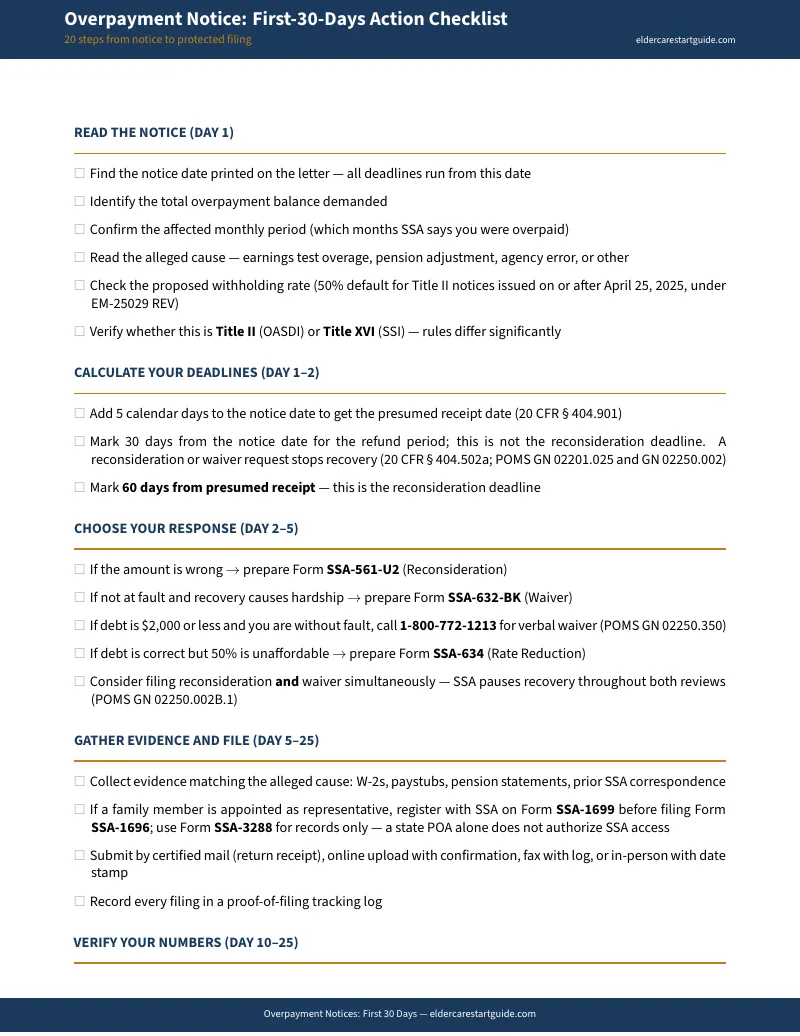
The Retirement Benefit Overpayment Notices guide is built around one idea: the 30-day refund period runs from the date printed on the notice. A timely waiver or reconsideration request stops recovery while SSA decides. Reconsideration has a separate 60-day deadline from receipt; SSA presumes receipt five days after the notice date unless you show otherwise.
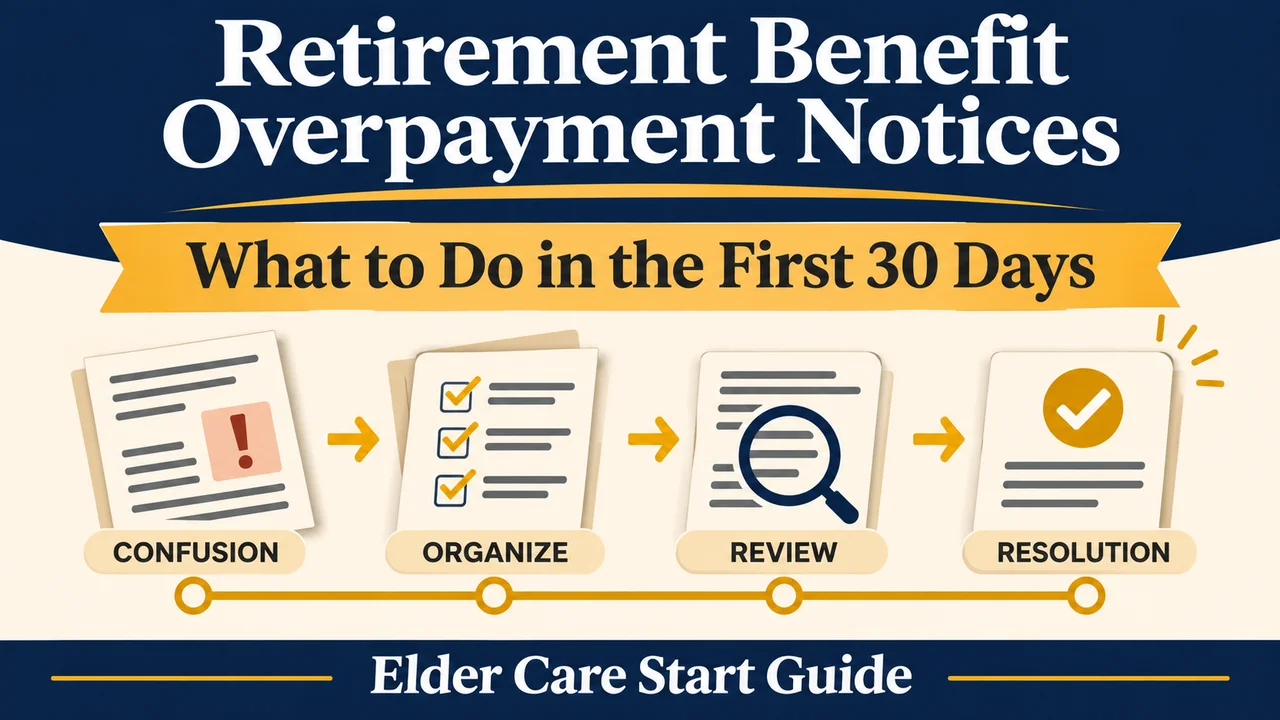
This is not a legal brief or an article that tells you to "contact SSA." It is a step-by-step triage system — from decoding the notice to choosing your response to filing with proof that nothing gets lost.
What You Get
- Notice Decoder Walkthrough — a guided reading of every part of the SSA overpayment notice: the notice date that anchors the 30-day refund period, the overpayment amount, the proposed withholding, the reason code, and the separate reconsideration deadline measured from receipt
- Form Selection Decision Map — a step-by-step logic tree that asks what you know about the debt and directs you to SSA-561 (the amount is wrong), SSA-632 (you weren't at fault and repayment would cause hardship), SSA-634 (the debt is correct but the withholding rate is too high), or a combination — because filing more than one at a time is allowed
- Proof-of-Filing Tracking Log — a structured log for every interaction with SSA: date, method (certified mail, fax, field office drop-off), tracking number, contact name, and what was agreed, so a lost filing can be reconstructed from the paper trail
- Monthly Financial Summary Worksheet — structured to match the POMS GN 02250.100 expense categories SSA uses when reviewing a hardship waiver, so the numbers you present are in the format the reviewer expects
- Helper Authority Chapter — why a state power of attorney does not automatically appoint an adult child as an SSA representative, how Form SSA-1696 and SSA-3288 work, and what a family member can and cannot do at each stage without formal appointment
- Withholding Rate Chronology — the full timeline from 100% default withholding (before March 25, 2024) to the 10% reform to the default 50% rate for Title II notices sent on or after April 25, 2025, so you know exactly what rate applies to your notice
- Free Help Directory — SSA field offices, the national 800 number, verified legal aid overpayment toolkits (Legal Aid DC, Charlotte Center for Legal Advocacy, NLSLA), Area Agencies on Aging, and older-adult legal services under the Older Americans Act
Plus: a printable 23-item action checklist that covers all six phases from "open the envelope" to "confirm the resolution."
Who This Guide Is For
- Adult children who handle a parent's mail and found an overpayment notice among the bills — the guide starts at "you just opened the letter" and walks you through every step
- Retirees managing their own benefits who want a clear path through the forms, deadlines, and phone calls without hiring an attorney
- Family helpers who aren't sure they're allowed to act — the helper authority chapter explains exactly what requires Form SSA-1696 and what does not
Why Not Just Call SSA or Use Free Resources?
Every SSA form is free, and this guide says so plainly. Legal aid organizations publish excellent overpayment toolkits for people who qualify. And calling SSA's 800 number is always an option.
But the forms do not come with a decision framework for choosing between them. The free toolkits are written for different regions, updated at different times, and aimed at people who already understand the basics. And a phone call to SSA does not create the kind of written, date-stamped filing trail that protects you if the system loses your paperwork.
This guide fills the gap between "here's a form" and "here's what to do, in what order, with proof." It is the organized system that keeps the 30-day window from slipping by while you're still figuring out where to start.
Satisfaction Guarantee
If the guide does not deliver what you expected, email [email protected] for a full refund, no time limit. Every purchase also includes the free First-30-Days Action Checklist — download it now to get the key dates and choices immediately, even before you decide on the full guide.
Get the Overpayment Notice Triage Guide →
Or download the free First-30-Days Action Checklist to start with the deadlines and decision points — no purchase needed.
Frequently Asked Questions
What if the rules change after I buy?
We update the guide when the rules change. Email us any time, even years later, and we'll send you the current edition free.