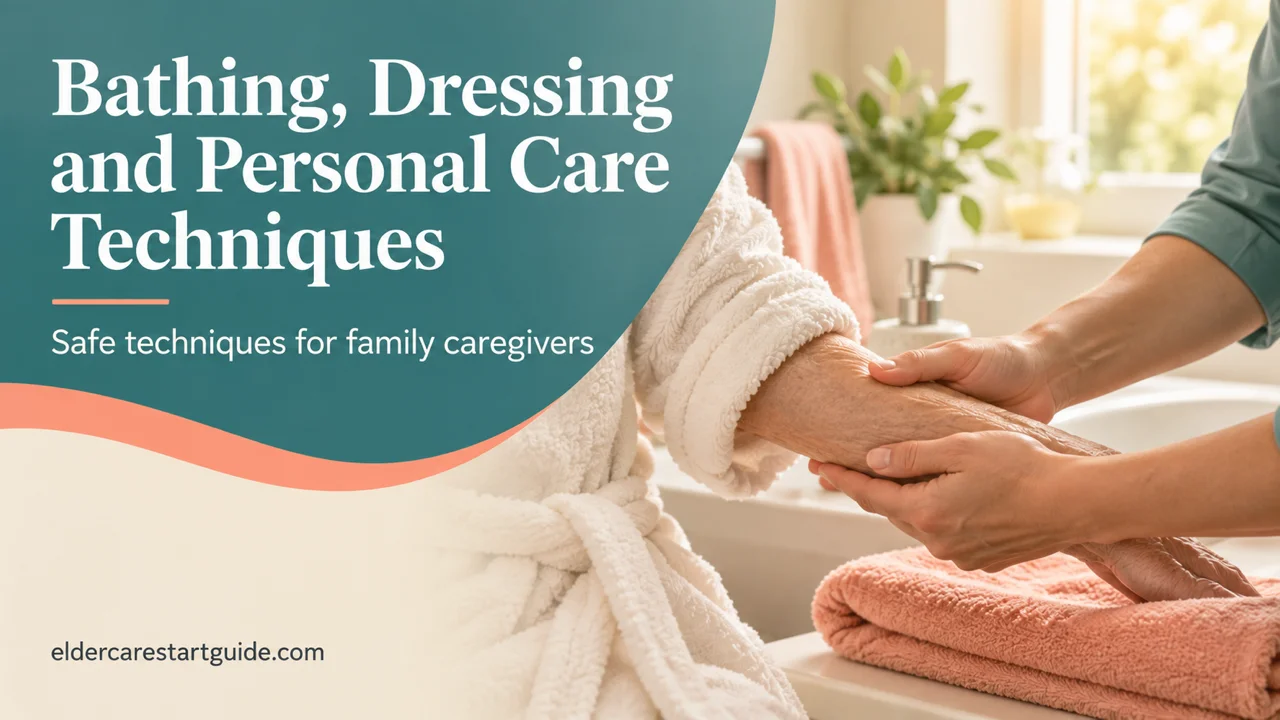
You were never trained for this
One day your parent could shower alone. The next day, they can't — and you're standing in a wet bathroom with no idea where to put your hands, how to keep them from falling, or how to get through this without one of you ending up hurt.
The government fact sheets say "assist with bathing." The AARP articles explain what Activities of Daily Living are. But nobody tells you the actual mechanics — the water temperature to test on your inner wrist, the washing sequence that prevents urinary tract infections, or the gait belt pivot angle that keeps your spine from absorbing the full weight of a transfer.
Meanwhile, your back is screaming. Your parent is refusing. And you are one bad lift away from becoming a patient yourself.
The In-Home Care Operating System
The Bathing, Dressing and Personal Care Techniques toolkit replaces scattered internet searches with a single, printable care system — the physical procedures, safety protocols, and behavioral strategies that trained home health aides use, adapted for family caregivers with zero clinical background.
This is not another list of tips. It is a step-by-step operating system built around three problems that make personal care dangerous:
- You don't know the safe technique. Every bathing, dressing, and transfer procedure in this guide follows OSHA safe-patient-handling principles and the CDC's infection control sequence — the same standards professional agencies train to.
- Your parent resists. The dementia resistance strategies are based on the Bathing Without a Battle protocol from UNC's School of Nursing — modifying the environment and the approach instead of arguing with a brain that can no longer process logic.
- Your body is breaking down. The body mechanics sections teach you how to align your working height, use your legs instead of your lumbar spine, and recognize caregiver strain before it sidelines you.
What's Inside the Toolkit
Functional Assessment (Katz ADL Index)
A structured scoring tool to measure exactly where your parent stands across six core activities — bathing, dressing, toileting, transferring, continence, and feeding. The same framework state Medicaid assessors use to determine eligibility for Home and Community-Based Services waivers, so your documentation speaks their language when you apply.
Step-by-Step Bathing Protocols
Three complete bathing procedures — walk-in shower, bathtub with transfer bench, and full bed bath — each with numbered steps covering room temperature prep (75°F minimum), inner-wrist water testing, non-slip mat placement, modesty towel draping, and the cleanest-to-dirtiest washing sequence that clinical guidelines recommend to prevent UTIs and skin infections.
Safe Transfer Mechanics
Gait belt transfer sequences for bed to wheelchair, wheelchair to toilet, and toilet to shower chair. Each sequence breaks down foot placement, hand positions, the verbal "ready-set-stand" cue, and the pivot technique that keeps your spine neutral. Based on OSHA safe-patient-handling principles — the same protocols that reduced caregiver back injuries by 60% in facilities that adopted them.
Dressing Techniques by Condition
The "affected side first" rule for stroke recovery patients. Seated dressing protocols to eliminate fall risk. An adaptive wardrobe transition checklist for switching to front-fastening garments, elastic waistbands, and magnetic closures — organized by condition (hemiplegia, arthritis, Parkinson's tremor) so the technique matches the limitation.
Dementia Resistance Strategies
When a parent with cognitive decline refuses a shower, their brain is misinterpreting sensory changes — cold air, running water, unexpected touch — as a physical threat. The toolkit teaches environmental modifications (pre-warmed towels, eliminating mirrors that cause confusion), verbal redirection scripts, visual cueing techniques, and waterless cleansing alternatives for the days when a full bath is not going to happen.
Skin Integrity Monitoring System
Daily pressure point checks for heels, tailbone, sacrum, and elbows using the Braden Scale risk categories. Staging reference from the National Pressure Injury Advisory Panel framework so you can tell normal redness from a Stage 1 pressure injury — and know exactly when to call the physician instead of waiting for the next appointment.
Infection Control and Hygiene Protocols
The CDC's hand hygiene sequence, a glove use decision tree, and surface disinfection protocols for bathroom and bedroom care areas. Plus oral care procedures for denture maintenance and caregivers managing a parent who resists mouth care.
Caregiver Body Mechanics Guide
Waist-height bed alignment for bed baths, static overreach prevention, the one-knee-on-bed technique for reaching across a patient, and long-handled tool recommendations (sponges, showerheads, dressing sticks) to protect your shoulders and lumbar spine. Includes a daily self-check for caregiver strain warning signs.
Toileting and Incontinence Management
Transfer sequences specific to commode and toilet assists, timed voiding schedules, pelvic floor prompt protocol, nighttime incontinence management, and a product comparison for absorbent briefs — with techniques to preserve dignity during the most sensitive care tasks.
Financial Pathways and Legal Protections
Medicaid HCBS waiver eligibility by state, VA Aid and Attendance benefits, FMLA protections for working caregivers, and international pathways — UK NHS Continuing Healthcare assessments, Canada's Home and Community Care Support Services, and Australia's My Aged Care ACAT process. The Katz ADL documentation from Chapter 2 feeds directly into these applications.
Printable Worksheets and Care Logs
Morning, midday, evening, and shift wrap-up observation sheets structured around ADL categories. A home safety audit checklist for bathroom, bedroom, and common areas. A family care conference agenda template. All designed for daily use and shift handoffs — not one-time planning.
Who This Is For
- Adult children doing hands-on care for the first time — after a fall, a hospital discharge, or a decline that made independent bathing unsafe
- Co-residing caregivers experiencing physical strain — your back, shoulders, or knees are telling you the current technique is not sustainable
- Long-distance family members coordinating paid aides — you need a documented care standard to train against and verify during handoffs
- Spouses providing daily personal care — preserving your partner's dignity while protecting your own body from the kind of injury that would take you both down
Why Free Resources Are Not Enough
The National Institute on Aging explains what ADLs are. AARP lists general caregiving tips across thousands of pages. Etsy sells blank care log templates for a few dollars. None of them give you the actual physical procedure — the hand placement for a gait belt transfer, the washing order that prevents UTIs, the environmental setup that stops a person with dementia from interpreting a shower as an attack.
Free resources describe the landscape. This toolkit gives you the operating manual.
Geriatric care managers charge $100–$200 per hour for personalized care plans. Home care agencies charge $25–$40 per hour for an aide — easily exceeding $6,000 per month for standard weekly coverage. Elder-law attorneys bill $250–$500 per hour for the legal documents you need to coordinate care. For a fraction of a single professional consultation, this toolkit gives you the daily procedures, the safety protocols, and the documentation framework to provide safe care at home — and the financial pathway chapters to help you figure out who should be paying for what.
Full Refund, No Time Limit
If the toolkit does not help you provide safer, more confident personal care for your parent, email [email protected] for a full refund. No time limit. No questions beyond "how can we help."
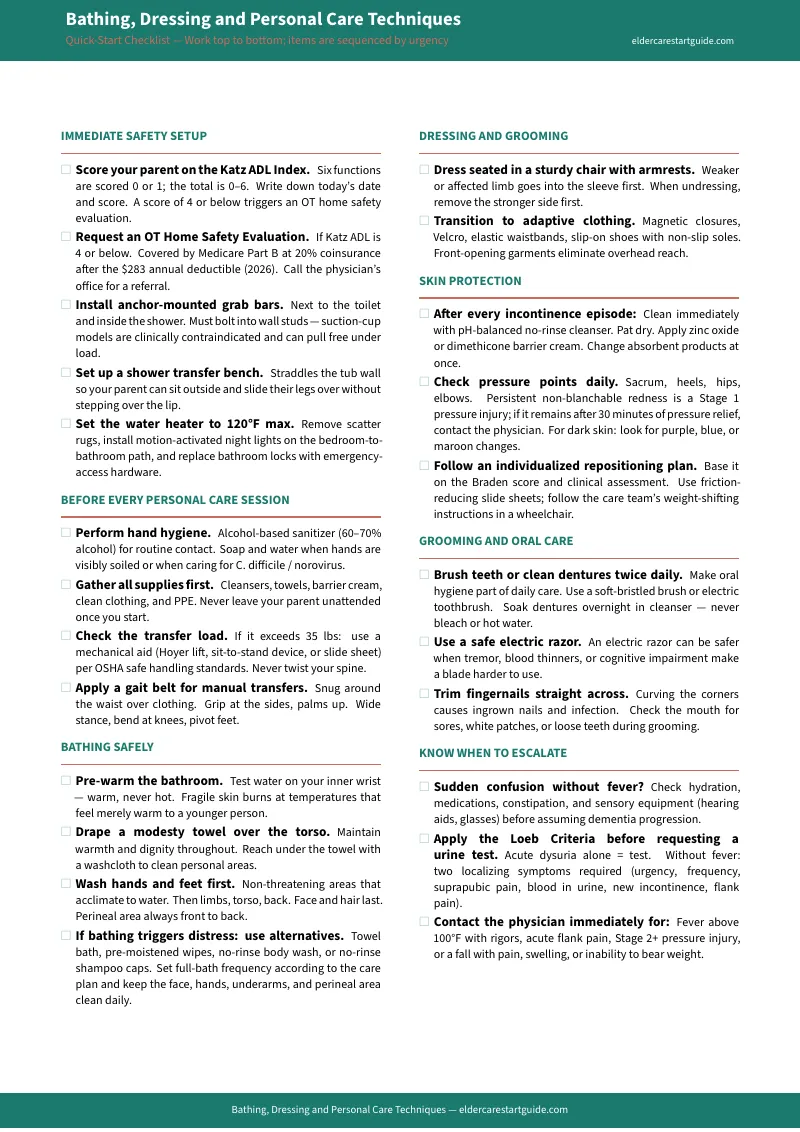
Download the free Quick-Start Checklist to see the daily care reference immediately — or get the full Bathing, Dressing and Personal Care Techniques toolkit for the complete system.