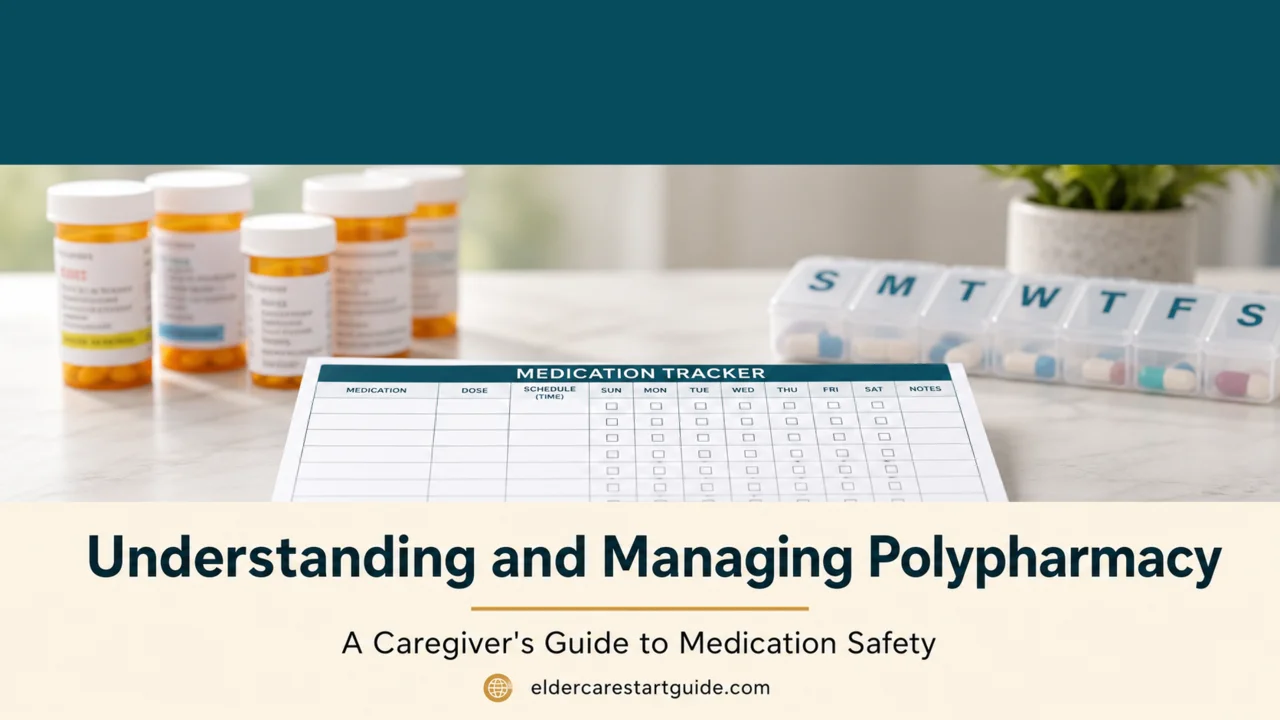
Nine Medications, Four Doctors, Zero Coordination
The cardiologist added a blood thinner. The sleep specialist prescribed something new. The primary care doctor auto-renewed everything. And now your parent is confused, dizzy, and falling asleep mid-sentence — and nobody can explain which drug is responsible.
You've Googled side effects until 2am. You've asked the pharmacist, who told you to "check with the doctor." But which doctor? The one who prescribed the problem drug, or the three who don't even know it exists?
Free medication lists from AARP and government websites tell you what your parent takes. They don't tell you which combinations are dangerous, how to get a comprehensive review, or what to say when a specialist refuses to reconsider a prescription they wrote two years ago. A medication tracking sheet doesn't stop a prescribing cascade. An information article doesn't prepare you for a discharge nurse handing you six new prescriptions and a 24-hour deadline.
The Medication Safety Navigation System
The Understanding and Managing Polypharmacy guide is a clinical-grade screening and advocacy system built for family caregivers — not a reading list about drug risks.
It takes the same validated tools that geriatricians use (Beers 2023 Criteria, STOPP v3, the Anticholinergic Cognitive Burden scale) and translates them into step-by-step workflows a non-clinician can use. Screen your parent's medication list for high-risk drugs. Calculate their cumulative anticholinergic burden. Detect prescribing cascades where one drug's side effect was misdiagnosed as a new condition. Then walk into the appointment with a structured deprescribing request that 87% of physicians agree to — because you're speaking their clinical language, not begging them to "try fewer pills."
What's Inside
- Beers 2023 & STOPP v3 High-Risk Drug Screener — cross-reference every medication on your parent's list against the two most widely used inappropriate-prescribing criteria in geriatric medicine. The screener flags drugs with elevated fall, bleeding, confusion, and cardiac risk — and names the safer alternatives physicians can switch to.
- Anticholinergic Burden Calculator — score each medication's ACB value and calculate the cumulative total. Three low-risk medications can produce a score of 3+ — the threshold linked to cognitive decline, delirium, and higher mortality. Most prescribers never calculate this across the full regimen because they only see their own prescriptions.
- Prescribing Cascade Detection Workflow — a structured sequence for identifying when a drug side effect has been mistaken for a new medical condition, triggering an unnecessary additional prescription. This is the single most common driver of polypharmacy in seniors, and it's invisible unless you look for it systematically.
- Deprescribing Conversation Scripts — word-for-word scripts based on clinical trial frameworks. Therapeutic inertia (the preference not to change existing regimens) is a barrier in 60% of deprescribing discussions, and 42% of physicians report low confidence in safe tapering. These scripts bypass both barriers by framing the request in evidence-based clinical terms, not emotional appeals.
- Hospital Discharge Reconciliation Checklist — the six-point discrepancy audit (omission, commission, wrong drug, wrong strength, wrong dosage form, wrong dose change) used during the highest-risk medication window. Studies find discrepancies in up to 98% of care transitions. This checklist catches them before they become adverse events at home.
- Free Medication Review Program Guide — eligibility criteria, request procedures, and appointment scripts for four national programs most families qualify for but never use: US Medicare Part D MTM (8+ covered drugs, 3+ chronic conditions), UK NHS Structured Medication Review, Canada MedsCheck, and Australia Home Medicines Review.
- Medication Dossier Worksheet — a single-source tracking template designed for households where medications come from multiple prescribers. Drug name, dose, frequency, prescriber, purpose, start date, pharmacy, and known interactions — all in one document you can hand to any provider, ER triage nurse, or pharmacist instantly.
- Legal Authority Quick-Reference — the specific documents you need (US Durable Power of Attorney, UK Lasting Power of Attorney, Canadian and Australian equivalents) to legally challenge a prescription, access health portals, and speak to providers on your parent's behalf. Without these, you can manage medications all day — but you can't change a single one.
- 4-Week Action Plan — a structured timeline that breaks the full process into manageable weekly milestones. Week 1: build the dossier. Week 2: screen for high-risk drugs. Week 3: prepare the deprescribing request. Week 4: attend the review and implement changes. No guessing about what to do next.
- Who to Call Reference Sheet — a fridge-ready guide that maps every medication management situation (stopping a drug, hospital discharge, insurance denial, nursing home concerns) to the right professional. No more calling the wrong office.
Every tool above is included as a standalone printable PDF — print the screener for the doctor visit, the dossier worksheet for the pharmacy, the discharge checklist for the hospital. You get 12 PDFs total: the complete guide plus 10 individual tools you can use independently.
Who This Is For
- Adult children managing a parent on 5+ medications prescribed by multiple specialists who don't coordinate care
- Caregivers facing a hospital discharge with new prescriptions that conflict with existing home medications
- Families who suspect their parent's confusion, drowsiness, or falls are drug-related — not age-related — but can't get a clear answer
- Anyone who wants to request a formal medication review but doesn't know how to start the conversation
- Caregivers who've been told "consider placement given polypharmacy" and need to understand what that actually means before making irreversible decisions
Why Free Medication Lists Don't Fix This
Government checklists and AARP tracking sheets help you record what your parent takes. That's useful — and it's about 10% of the problem.
The other 90% is clinical risk screening (which medications interact badly, which ones compound each other's anticholinergic load), physician advocacy (how to request a deprescribing review without being dismissed), care-transition safety (how to reconcile discharge prescriptions with home medications under a 24-hour deadline), and system navigation (which free review programs your parent qualifies for and how to actually get enrolled).
No free resource stitches these pieces together. Government sites cover eligibility but not physician scripts. Medical articles explain drug risks but not how to request a review. Caregiver forums share experiences but not validated clinical tools. This guide connects all four — screening, advocacy, transitions, and system access — into a single workflow you can execute in four weeks.
The Professional Fee Shield
Geriatric care managers charge $75–$250 per hour. Elder-law attorneys run $195–$500 per hour. A comprehensive care manager assessment alone costs $800–$2,000 out of pocket — and none of it is covered by Medicare, Medicaid, or standard insurance.
This guide doesn't replace those professionals. It replaces the hours of billable time they'd spend gathering your parent's medication history, screening for interactions, and explaining how to request a review. Arrive at that first appointment with a completed medication dossier, a calculated ACB score, and a list of flagged high-risk drugs — and the professional starts solving your problem instead of assembling your data.
100% Satisfaction Guarantee
If the guide doesn't help you feel more organized and confident in managing your parent's medication safety within 30 days, email us for a full refund. No forms, no questionnaires. You're navigating one of the most stressful chapters of family caregiving — we won't add purchase anxiety to the pile.
— Less Than One Pharmacist Consultation
A single private medication review costs $150–$300 out of pocket. This guide gives you the screening tools, conversation scripts, and system navigation to advocate for your parent's medication safety across every appointment, every transition, and every prescriber — for a fraction of one consultation fee.
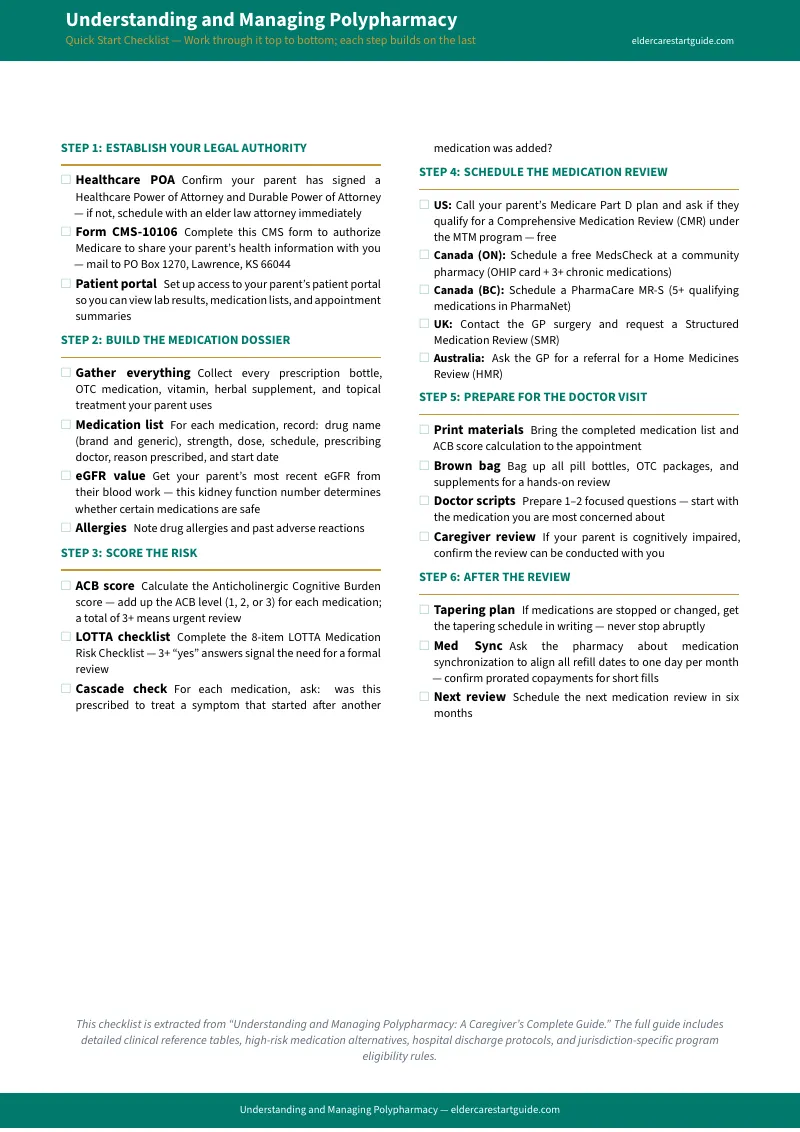
Start with the free Quick-Start Checklist to assess your parent's medication risk tonight, or get the full guide and begin the 4-week action plan.