You Know You Need a Break. You Just Don't Know How to Take One Safely.
You have not had a full day off in months. Maybe longer. Every time you think about stepping away, the same questions stop you: Who would know her medication schedule? What if she falls? What if the substitute mistakes a UTI for worsening dementia and calls for a nursing home evaluation?
So you stay. You absorb another week. Your back gets worse, your sleep gets shorter, and the resentment you swore you would never feel starts settling in.
The free checklists online tell you to "arrange respite care." They do not tell you how to build a handoff binder that a substitute can actually follow, how to fund the break without wrecking your Medicaid lookback window, or how to prepare a parent with cognitive impairment for someone new walking through the door.
The Respite Handoff System
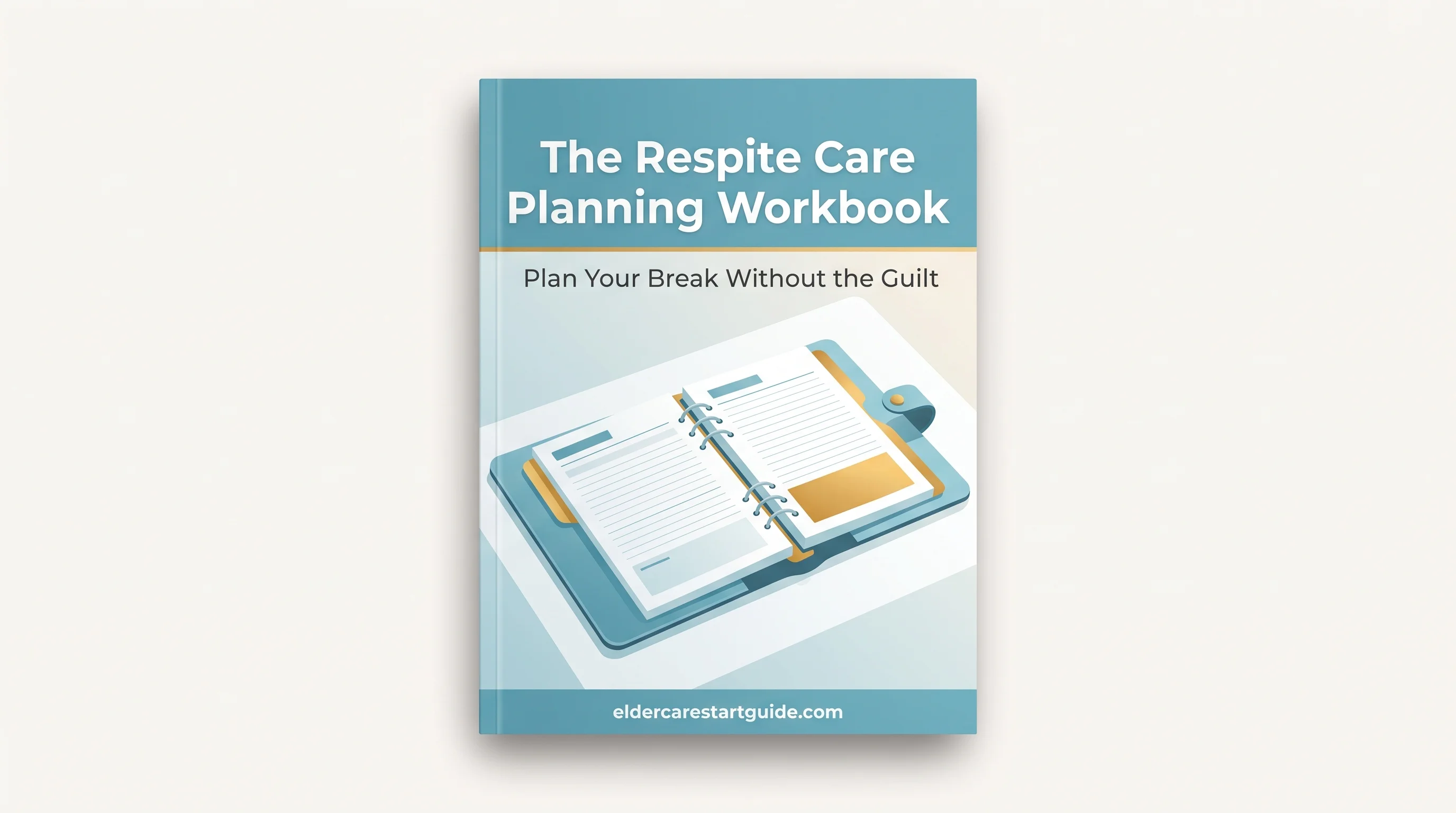
The Respite Care Planning Workbook is not a list of suggestions. It is a structured handoff system — the same approach professional care facilities use when transferring patient responsibility between shifts, adapted for family caregivers arranging their first (or fifth) break.
It starts with two validated self-assessment tools (the Zarit Burden Interview and the Modified Caregiver Strain Index) so you can see your burnout level in objective numbers instead of pushing through on instinct. Then it walks you through every step of arranging, funding, preparing for, and documenting a respite period — from the legal documents your substitute needs on hand to the clinical thresholds that tell them when to call the doctor versus when to call 911.
What's Inside
Burnout Assessment Tools
The ZBI-22 and Modified Caregiver Strain Index, fully scored and interpreted. These are the same tools geriatric care managers use in $300-per-hour assessments. You will have your results in 15 minutes — and you will finally have objective evidence for the conversation with your siblings about sharing the load.
Respite Options Comparison
In-home aides, adult day programs, short-stay residential, volunteer visitor programs, and faith-based respite compared side by side — with cost ranges, vetting criteria, minimum-hour requirements, and red flags that indicate a provider is not equipped for your parent's care level.
Multi-Country Funding Guide
US coverage includes HCBS waivers (with state-by-state cap differences), the National Family Caregiver Support Program, VA Aid and Attendance, and Medicaid respite provisions. UK sections cover local authority carers assessments, Carer's Allowance, and NHS Continuing Healthcare. Australia covers CHSP, Home Care Packages, and Carer Gateway. Canada covers provincial respite programs, CDCP, and Veterans Affairs. Current eligibility thresholds included.
Care Handoff Binder Templates
Fillable templates covering medication schedules, daily routine breakdowns (morning, midday, evening, overnight), dietary restrictions, mobility transfer procedures, cognitive status baselines, and emergency contacts — formatted for someone who has never met your parent. Because the substitute who shows up should not have to text you every two hours asking what to do next.
Clinical Escalation Thresholds
Decision trees for the situations that terrify every caregiver about leaving: when to call the doctor versus when to call 911, UTI symptoms that mimic sudden dementia onset, fall assessment protocols, medication error response steps, and transfer trauma recognition. Your substitute gets a one-page protocol — not a judgment call.
Substitute Training Checklist
Task-by-task competency sign-offs covering ADLs, medication administration, fall response, wandering protocols, and equipment operation. Each item has a demonstrated/observed/competent checkbox sequence so you know your substitute is ready before you leave — not after you get the phone call.
Daily Care Log Templates
Shift-by-shift observation sheets so your substitute documents what happened while you were away. Structured by ADL and IADL categories, not free-text journals that say "everything was fine" when it was not.
Sibling Coordination Framework
Templates for documenting your daily care burden in terms remote siblings can verify, presenting the data at a family meeting, and proposing specific respite rotations. Designed to counter the "perking up" effect — when your parent mobilizes for a 30-minute phone call and your brother concludes everything is fine.
Financial Tracking and Medicaid Protection
Respite cost tracking worksheets, out-of-pocket expense logs, and reimbursement claim templates structured around the five-year Medicaid lookback rules. Every dollar is documented so a paid respite arrangement cannot be reclassified as a gift during a future eligibility review.
Guilt and Anxiety Management
Evidence-based strategies for the emotional barriers that keep you from using the respite you arrange. Covers the specific patterns: the belief that needing help means failing, the fear that no one else can provide adequate care, the guilt of enjoying time away, and the compulsion to check in so frequently that the break is not actually a break.
Who This Is For
- Burned-out primary caregivers who have not had a real break in months and do not have a safe handoff system in place
- Sandwich generation parents managing children and an aging parent who need structured respite, not another suggestion to "practice self-care"
- Default caregivers — the sibling who lives closest — who need documented proof of the care burden to get family members to share respite responsibility
- Adult children of spousal caregivers who can see their parent burning out but cannot get past the "I don't need help" wall
- Long-distance family members arranging respite for a primary caregiver who will not arrange it for themselves
Why Free Checklists Are Not Enough
The free respite care resources from the National Institute on Aging and local Area Agencies on Aging are helpful starting points. But they give you a list of steps with no system for executing them. They do not include fillable handoff binder templates, clinical escalation protocols, Medicaid-safe financial tracking, or validated burnout assessments.
A geriatric care manager charges $90 to $250 per hour to build what is essentially a custom version of this system — and most families need three to five sessions. Elder law attorneys charge $300 to $500 per hour for the legal document audit alone. This workbook gives you the operational framework that sits between the free PDFs and the $2,000 professional assessment — for a fraction of one billable hour.
100% Satisfaction Guarantee
If the workbook does not give you a clear, actionable path to arranging your first respite break, email us for a full refund. No forms, no justification, no waiting period.
— Less Than One Hour of Home Aide Coverage
Family caregivers spend $7,000 to $13,000 per year out of pocket supporting their loved ones. This workbook costs less than a single hour of professional home aide coverage — and it gives you the system to make every future respite arrangement safer, cheaper, and actually restorative.
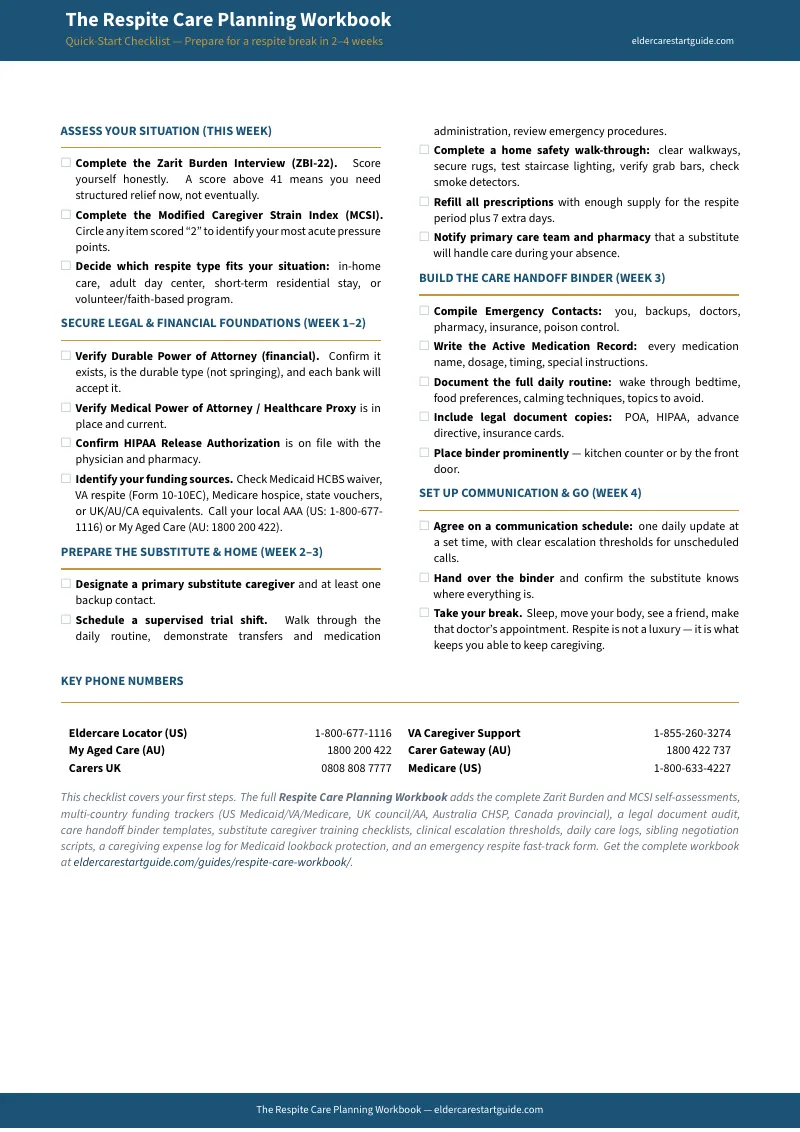
Download the free Quick-Start Checklist to see the framework, or get the full workbook and start building your handoff binder tonight.